
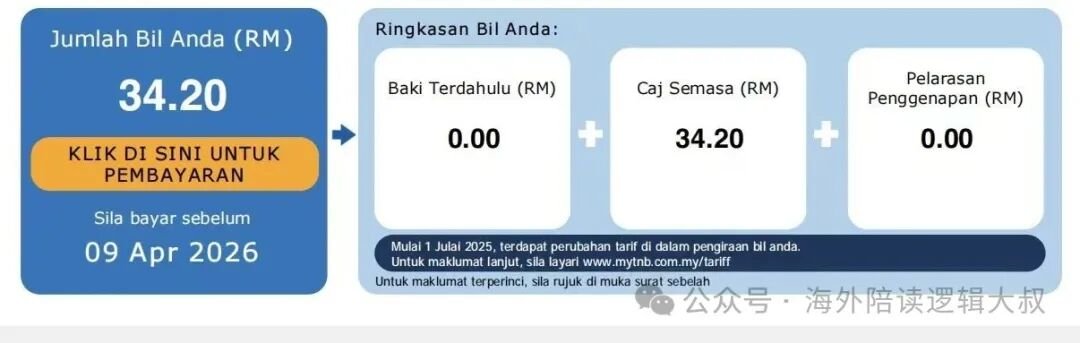
Living in Penang as a family of three cost about RM 5,947 last month, excluding school and visa fees. Rent for a three-bedroom sea-view flat is RM 2,000, tuition RM 1,120, insurance RM 780, food RM 1,100, and electricity only RM 34.20. The same RM 6,000 can feel tight or comfortable.
1. What this budget covers, and what it leaves out
School fees and visa-related costs depend entirely on which school you choose and what status you hold, and the spread runs into thousands. Including them would make the whole table useless as a reference. So this covers daily life only: food, housing, transport, insurance, and utilities.
All figures are in Malaysian Ringgit (RM). Roughly RM 1 has sat between CNY 1.5 and 1.7 in recent years — check the rate on the day.
2. Housing: what RM 2,000 rents
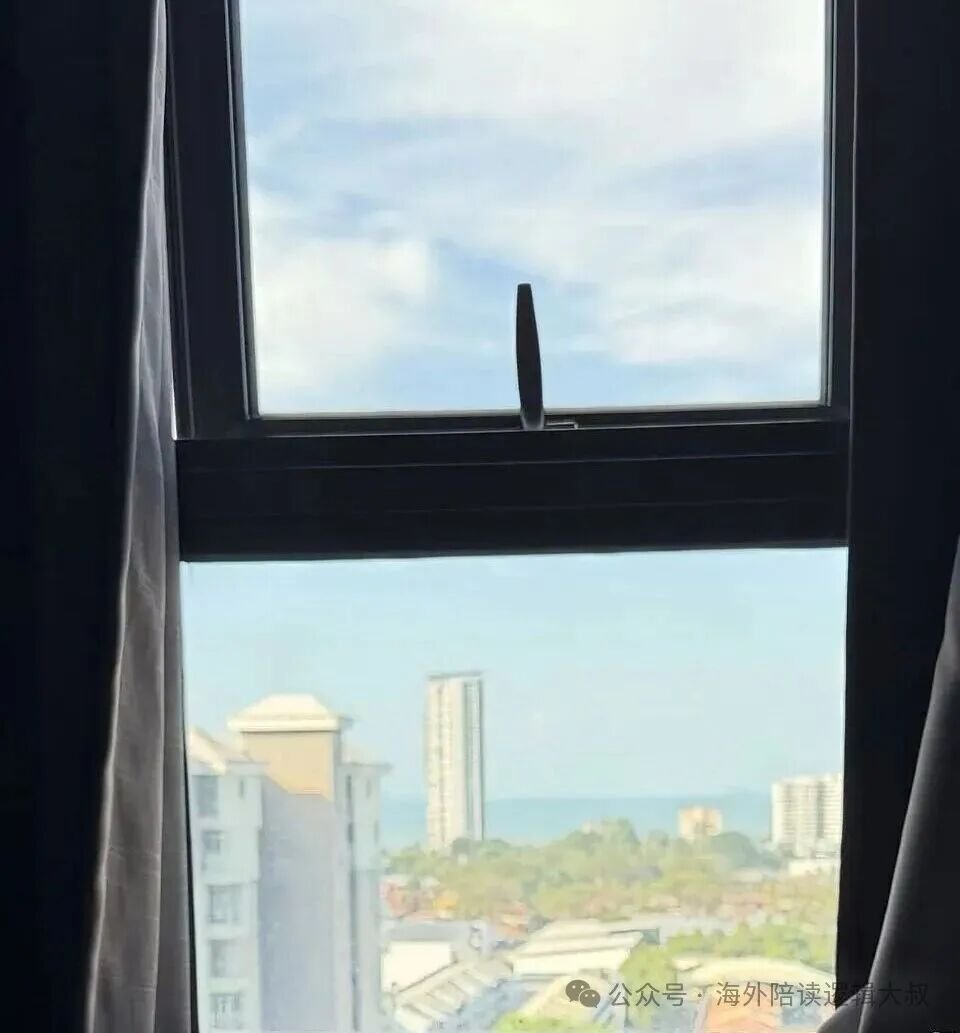
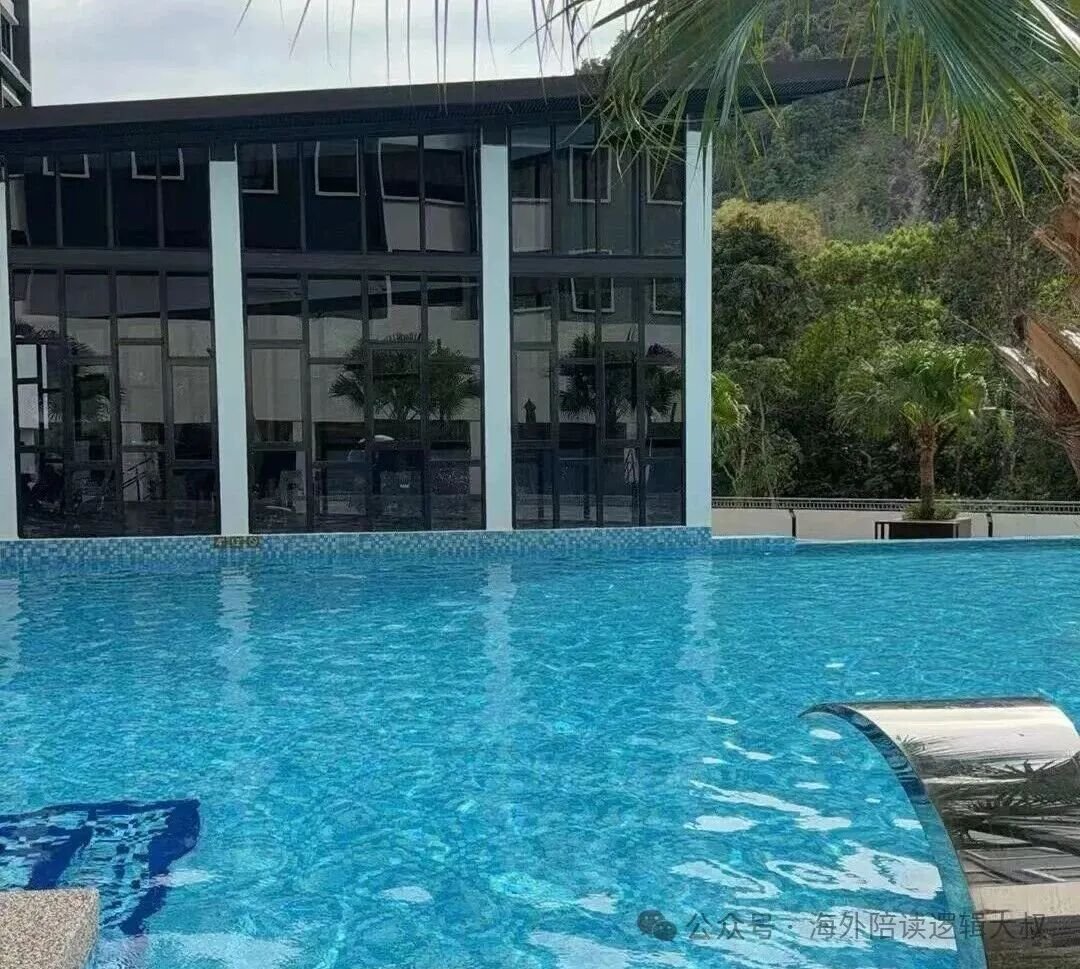
We rent a three-bedroom apartment with a sea view for RM 2,000 a month.
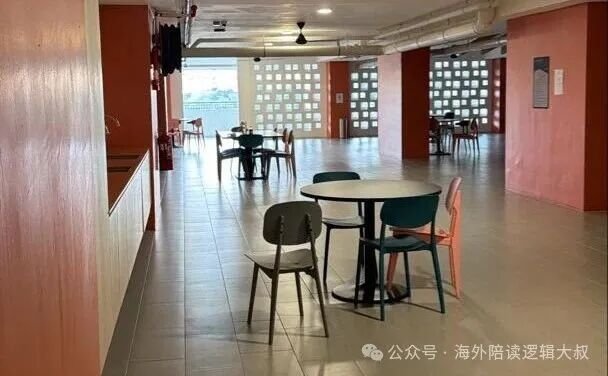
The sea view is not what makes it good value. The building's facilities are: a pool, a gym, and most importantly a large common area and a free study room. The children have somewhere to do homework after school and somewhere to burn energy at weekends. Bought separately, both would cost far more than a few hundred ringgit a month.
So when viewing a place, do not stop at the rent and the finish. Ask for the list of facilities and work out what each one replaces. Two apartments at the same rent can differ by 30% in real cost.
3. Food: how RM 1,100 splits
Two growing children — this is not the line item to cut. Our split:
- Cooking at home: RM 600/month. We buy at the local pasar (wet market) rather than the supermarket. Same ingredients, noticeably cheaper and fresher. Eating at home makes health and thrift the same decision.
- Eating out: RM 500/month. Once or twice a week with the children. Penang's reputation as a food destination is earned: roti canai, char kway teow and nasi lemak at a hawker centre often come in at a few ringgit a head.
A practical rule: if you eat at hawker centres rather than mall restaurants, the food budget drops by roughly a third. That is not a sacrifice — it is how most people here eat anyway.
4. Education: RM 1,120 on tuition, the largest single item
Outside school, tutoring is the biggest cost: RM 1,120 a month, five sessions a week.
For a child who has just arrived and does not yet live in an English-speaking environment, frequency matters more than price per hour. Five short sessions beat one long one, because language sticks through repetition, not through duration.
So set the frequency first and compare prices second. Do it the other way round and you spend more for a worse result.
5. Insurance: RM 780, and it is not optional
Health insurance for three people: RM 780 a month, RM 260 each.
This is different in kind from everything above. It is not spending, it is a floor. One emergency admission abroad can wipe out several months of living costs. What you buy is not value for money but the ability not to make a hard decision in a bad moment.
One more note: do not simply take the first insurer the school recommends. Schools usually work with several brokers. Collect the contacts, put the cover, exclusions and excess on a single comparison sheet — the same premium can buy very different protection.

6. Transport: RM 200, and no car
Do you need a car in Malaysia? Not necessarily. We spend about RM 200 a month on ride-hailing and buses.
What we avoid is the whole bundle: loan repayments, insurance, servicing, parking, fuel. Spread across the year, that is over a thousand ringgit a month saved.
The trade-off is flexibility — out-of-the-way places are awkward, and you wait at peak times. If your daily radius is school, apartment, mall and hawker centre, the trade is clearly worth it.
When does a car start to pay? When your trips depend on ride-hailing often enough that the monthly bill sits above RM 600—800.

7. Utilities and connectivity: RM 247
Connectivity is RM 185 a month: three SIM cards plus fibre broadband, which covers the whole family's calls and work.
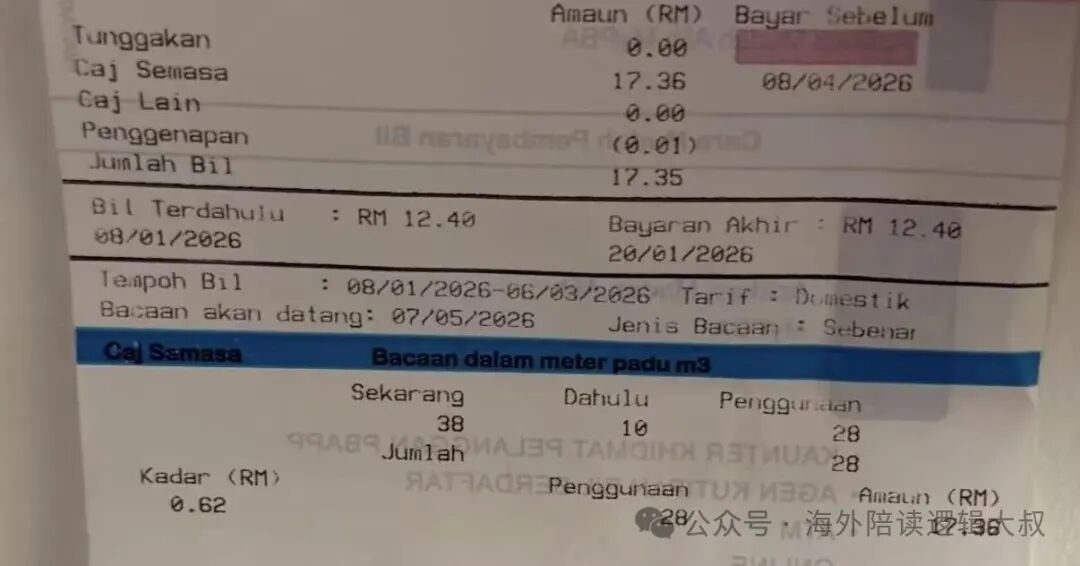
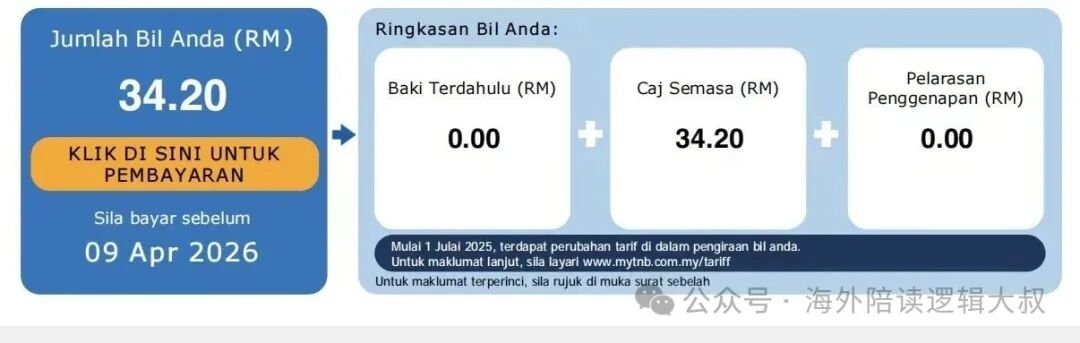
Electricity was RM 34.20 — yes, under RM 40. In a three-bedroom apartment with two children at home. Three habits get you there: open windows rather than air conditioning, use the building's free common areas during the day, and run high-draw appliances in one block.
People treat a low electricity bill as luck. It is mostly habit. Penang has a steady sea breeze and rarely extreme heat, so air conditioning is less a necessity here than a reflex.

8. The monthly total
| Item | RM / month | Notes |
|---|---|---|
| Housing | 2,000 | Three bedrooms, pool, gym, study room |
| Education | 1,120 | English tuition, five times a week |
| Insurance | 780 | Health cover for three |
| Food | 1,100 | 600 at home + 500 eating out |
| Transport | 200 | Ride-hailing and bus, no car |
| Connectivity | 185 | Three SIMs plus fibre |
| Utilities | 62 | Electricity 34.20 + water approx. 28 |
| Flexible | 500 | Household goods, activities, one-offs |
| Total | 5,947 | Roughly CNY 9,000 |
This excludes school fees, visa costs, flights and large one-time purchases. If your household differs — one child, or a two-bedroom flat — adjust housing and education proportionally and you will land close to your own number.
9. Three things worth copying
- Price the building's facilities into the rent. Ask for the facility list when viewing: pool, gym, study room, playground. What they replace adds up faster than you expect.
- Eat at hawker centres, not malls. Two to three times the price for much the same meal.
- Fix the frequency before negotiating the price. Whether it is tutoring or insurance, decide how often and what must be covered first. Get the order right and the same money buys more.
Living costs in Penang are elastic, but the real difference is not where things are cheaper — it is how you allocate. The same RM 6,000 can be a tight month or a comfortable one.
Frequently asked questions
What does a month in Penang cost for a family of three?
Excluding school fees and visa costs, our household runs at about RM 5,947 a month, with housing at RM 2,000, education at RM 1,120 and insurance at RM 780 as the three largest items. Your figure will move with housing standard and number of children.
Can you live in Penang without a car?
Yes, if your daily radius is school, apartment, mall and hawker centre. Ride-hailing plus buses costs us around RM 200 a month. Once that bill sits above RM 600-800 a month, a car starts to make financial sense.
Can electricity really be under RM 40 a month?
It can. The key is opening windows instead of running air conditioning and using the building's free common areas. Penang has a steady sea breeze and rarely extreme heat.
Is RM 2,000 a month typical for rent?
It rents a three-bedroom apartment, in our case with a partial sea view and access to a pool and gym. Location, building age and whether it is furnished all move the number, so view in person and confirm the facility list before signing.