
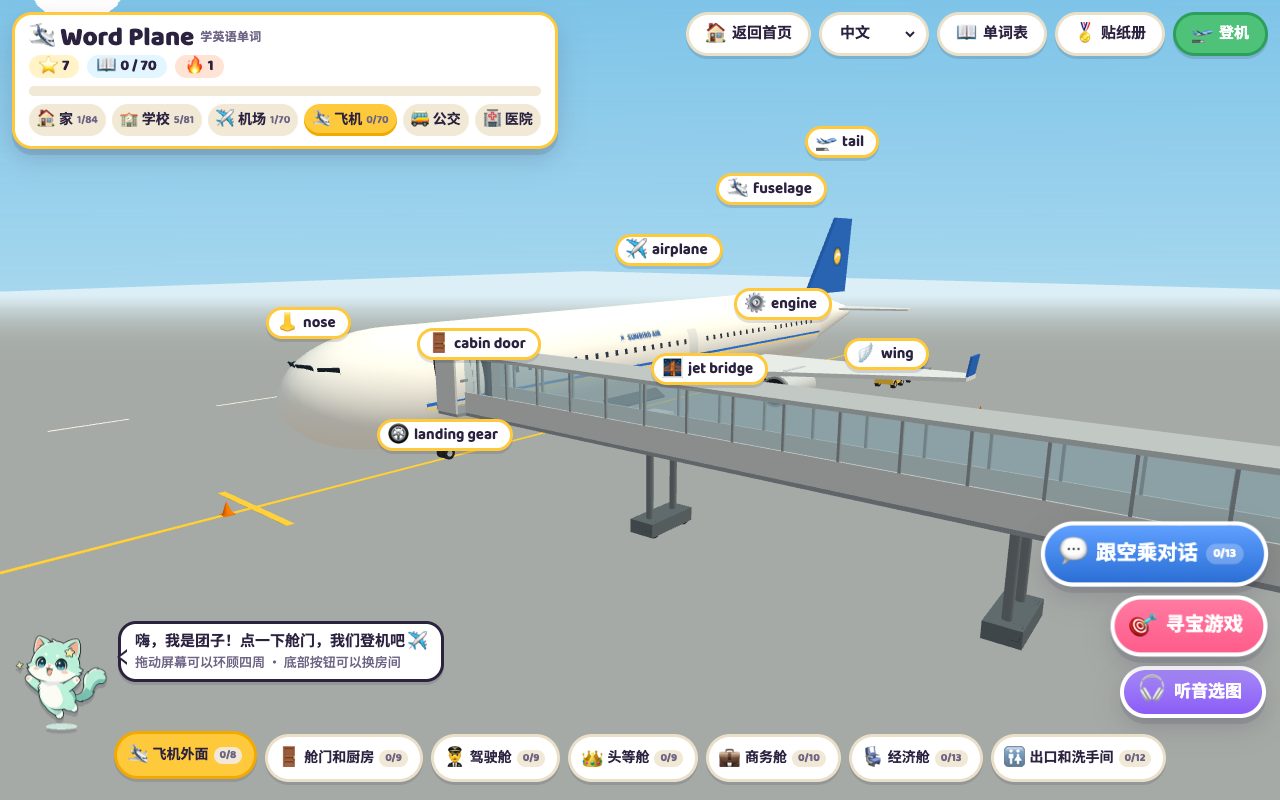
The Plane scene in Word World has 70 words in 7 areas and 13 conversations with the cabin crew, such as asking for water or a blanket, choosing a meal, an upgrade, visiting the cockpit and feeling sick. Each step offers three replies; a wrong one is flagged as rude or off-topic, and the right one is read aloud for the child to repeat.
When a child wants a drink on a plane, one of two things usually happens: they say nothing, or they blurt out Water! The first is not daring to speak; the second is speaking, but not very politely. Besides words, the big feature of the Plane in Word World is 13 conversations with the cabin crew that practise asking politely.
1. From the apron into the cabin: 7 areas, 70 words
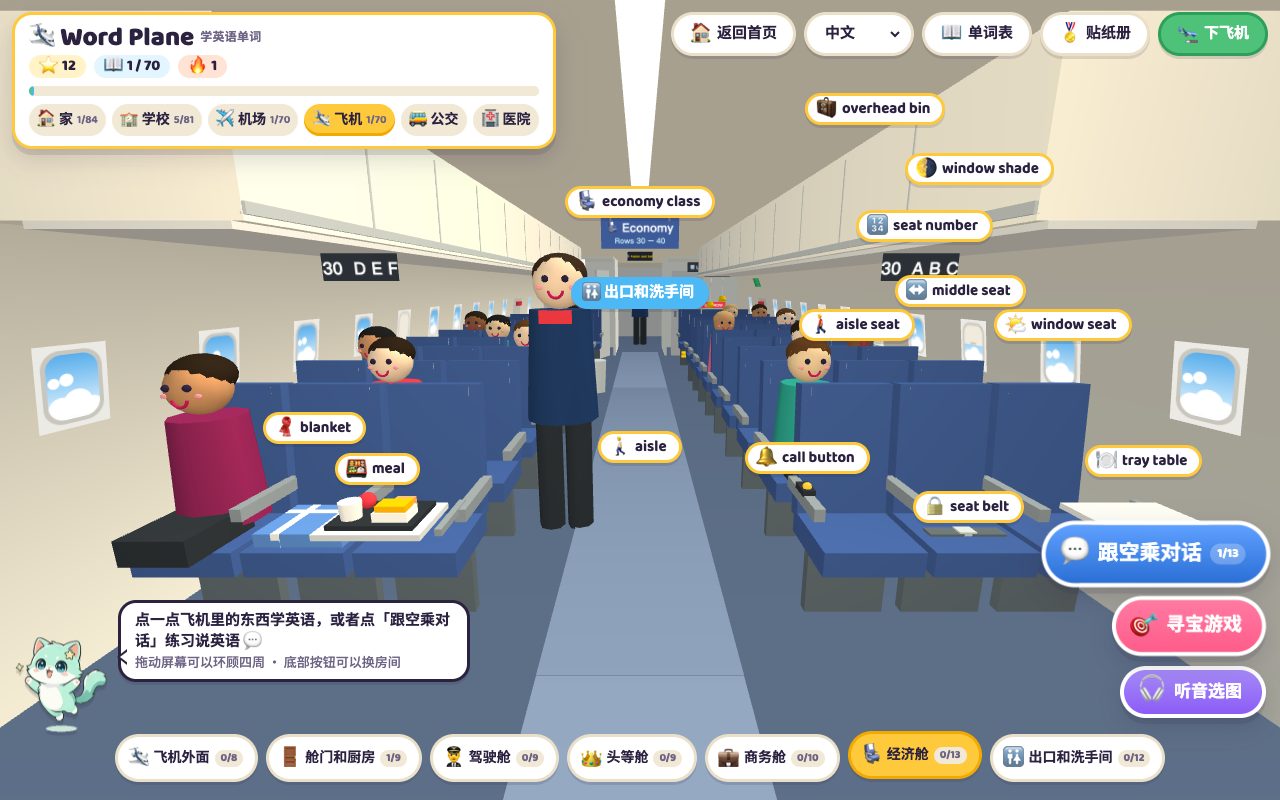
The child starts on the apron looking at the whole plane. Tap the cabin door and the camera walks along the jet bridge and inside, which takes about ten seconds. Areas and word counts:
| Area | Words | Examples |
|---|---|---|
| Outside the plane | 8 | fuselage, wing, engine, landing gear, jet bridge |
| Cabin door and galley | 9 | cabin door, flight attendant, galley, cart |
| Cockpit | 9 | captain, co-pilot, yoke, throttle, autopilot |
| First class | 9 | suite, flat bed, amenity kit, eye mask, pajamas |
| Business class | 10 | recline, footrest, headphones, power outlet |
| Economy class | 13 | aisle, window seat, tray table, overhead bin, call button |
| Exits and lavatory | 12 | emergency exit, life vest, oxygen mask, occupied, vacant |
Economy has the most words because that is where the child spends the flight. Window seat, middle seat and aisle seat sit side by side, which also helps with reading the seat on a boarding pass.
2. Thirteen conversations, spread across the cabin
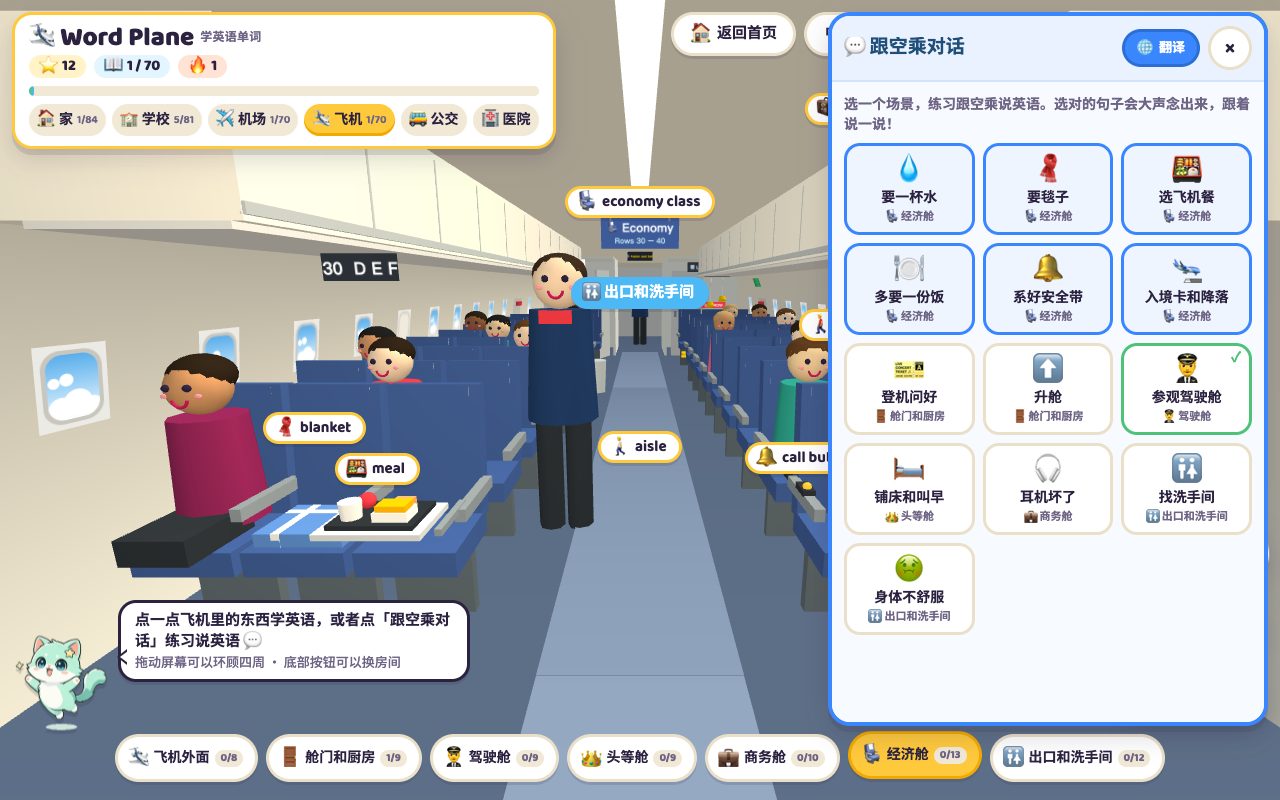
The blue Talk to the crew button lists all 13 situations, with the ones in the current cabin first:
| Where | Conversations |
|---|---|
| Cabin door and galley | Boarding, Upgrade |
| Cockpit | Visit the cockpit |
| First class | Bed and wake-up call |
| Business class | Broken headphones |
| Economy class | Asking for water, Asking for a blanket, Choosing a meal, An extra meal, Fasten your seat belt, Arrival card and landing |
| Exits and lavatory | Finding the toilet, Feeling sick |
Pick a conversation from another cabin and the camera walks there first, then the dialogue begins.
3. How a conversation works
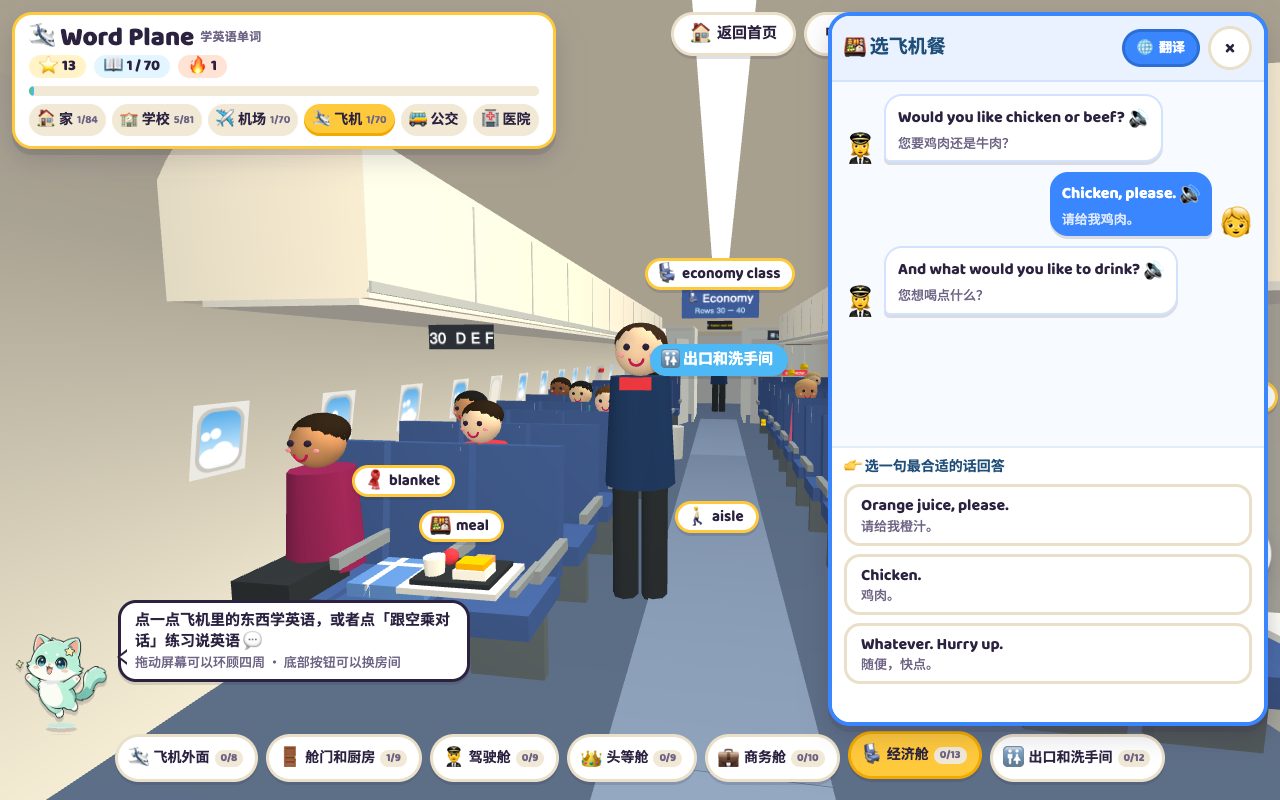
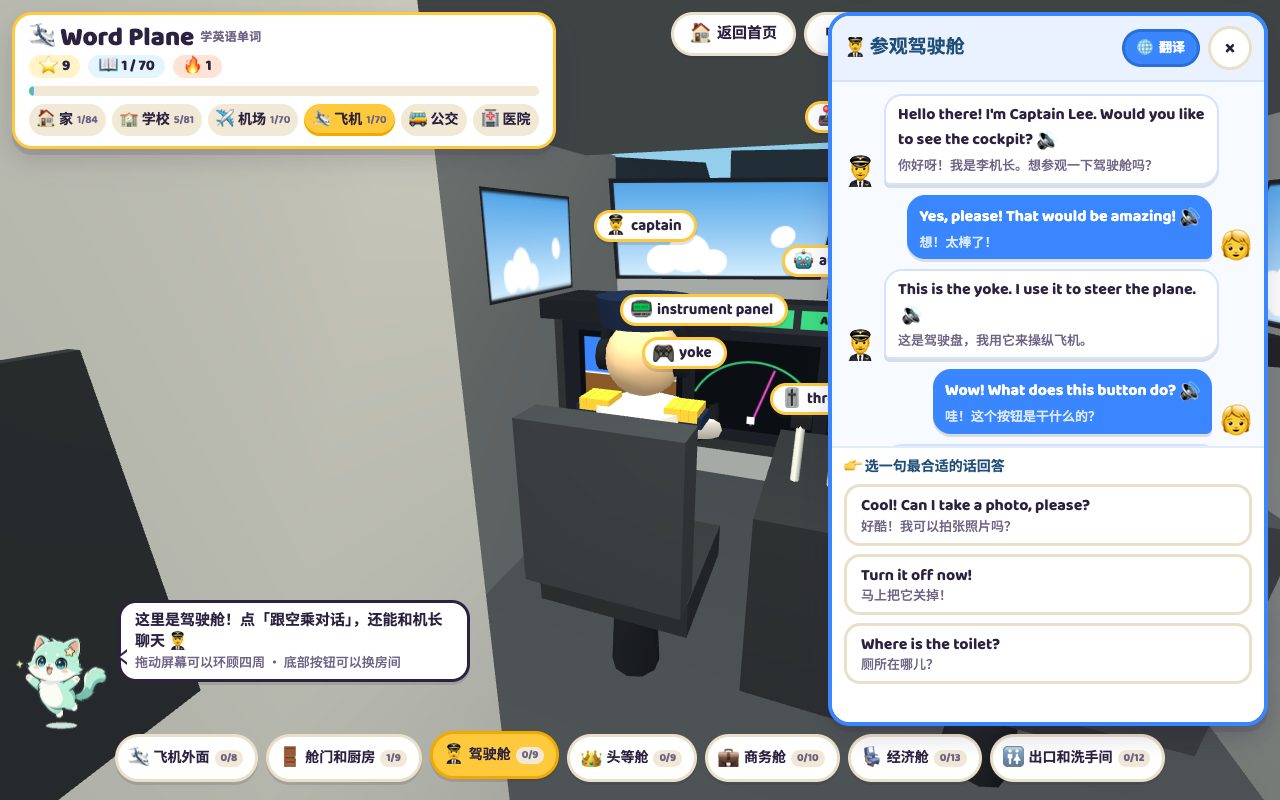
Take Asking for water. The flight attendant says: Hi! You pressed the call button. How can I help you? The child chooses one of three replies:
- Could I have some water, please?
- Water! Now!
- My name is Tom.
The right answer is read aloud so the child can repeat it, and the crew member moves on with Still or sparkling? A wrong answer does not reveal the right one; it says what went wrong — That is not very polite. Try a nicer way to say it, or That does not answer the question. Listen again. I like that split: one teaches manners, the other teaches listening.
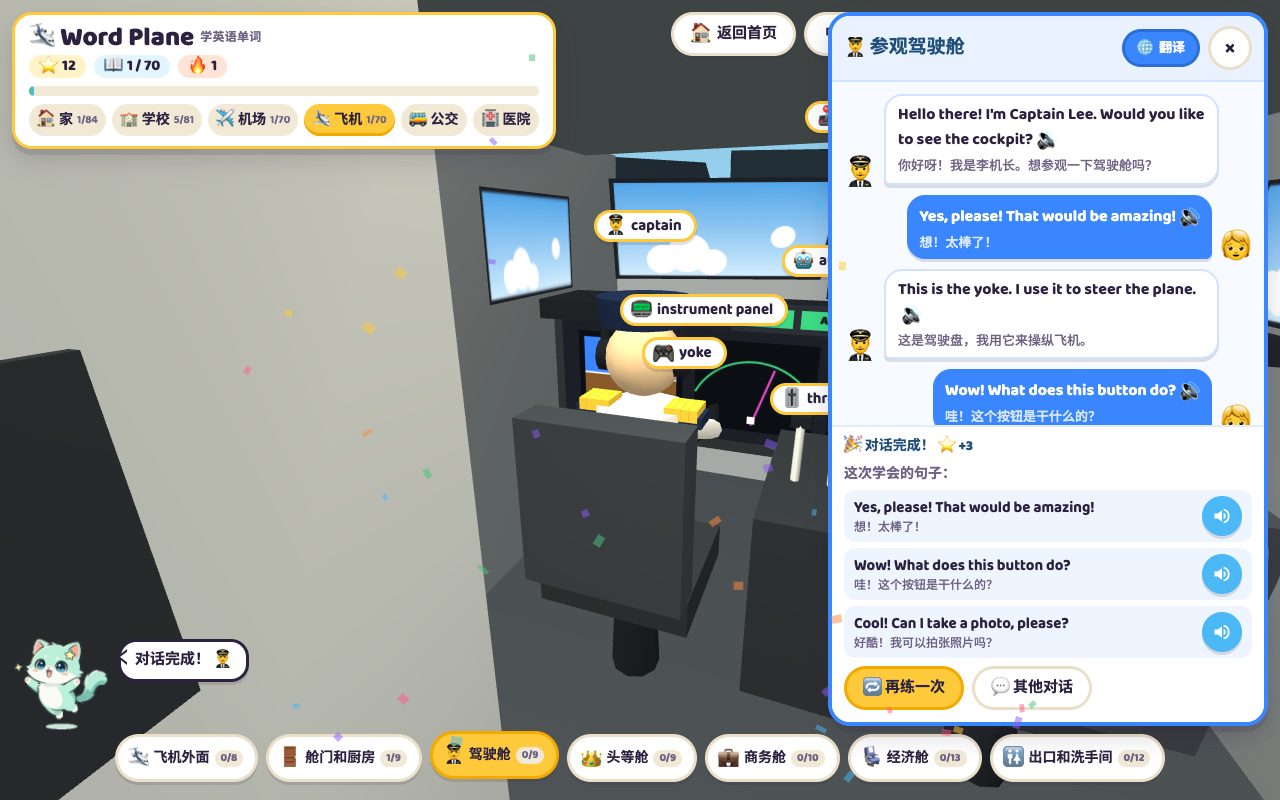
At the end the screen lists every sentence learned, each with a speaker button, plus Practise again. The Translate button in the corner shows or hides the translation; once the child is comfortable, I suggest turning it off.
4. The ones I recommend most
- Upgrade: the child asks Can I upgrade to business class? and Can I pay by card? Afterwards, Go to my new seat really walks the camera to business class seat 5A. Children love this.
- Visit the cockpit: Captain Lee shows the yoke and the autopilot, and the child asks What does this button do? and Can I take a photo, please? Short lines, good for a first try.
- Feeling sick: I don't feel very well. I feel sick. Rarely needed, but when it is needed it matters most.
- Arrival card and landing: Could I borrow a pen?, plus the pre-landing instructions put your seat up and open the window shade.
5. How stars are counted
Each step answered right on the first try earns a star, and finishing a conversation for the first time adds two more. The button shows how many are done, such as 3/13. Some conversations also change the scene: after Choosing a meal, the meal appears on the tray table.
6. How to use it before a flight
- A day or two before, play the six economy conversations; these are the ones the child will really use.
- Then play Finding the toilet and Feeling sick to meet Occupied, Vacant and sick bag.
- On the plane, let the child press the call button and ask for water. The moment they say Could I have some water, please? is the whole point of this scene.
For the trade-offs between window, middle and aisle seats, see how to pick a seat on a plane.
7. Before and after the plane
Before the plane comes the Airport, for reading the board and the signs. For getting around after landing, carry on with the Bus.
Frequently asked questions
How many conversations are in the Plane scene?
13: Boarding, Upgrade, Visit the cockpit, Bed and wake-up call, Broken headphones, Asking for water, Asking for a blanket, Choosing a meal, An extra meal, Fasten your seat belt, Arrival card and landing, Finding the toilet and Feeling sick.
What happens with a wrong answer?
The right answer is not shown. A rude choice says to try a nicer way to say it; an off-topic choice says to listen again. The child keeps choosing.
Can the translation be hidden?
Yes. The Translate button at the top of the dialogue panel turns it on or off.
Why is there a wait after tapping the cabin door?
Boarding plays a short walk along the jet bridge into the cabin, about ten seconds. Areas and dialogues open once it finishes.