
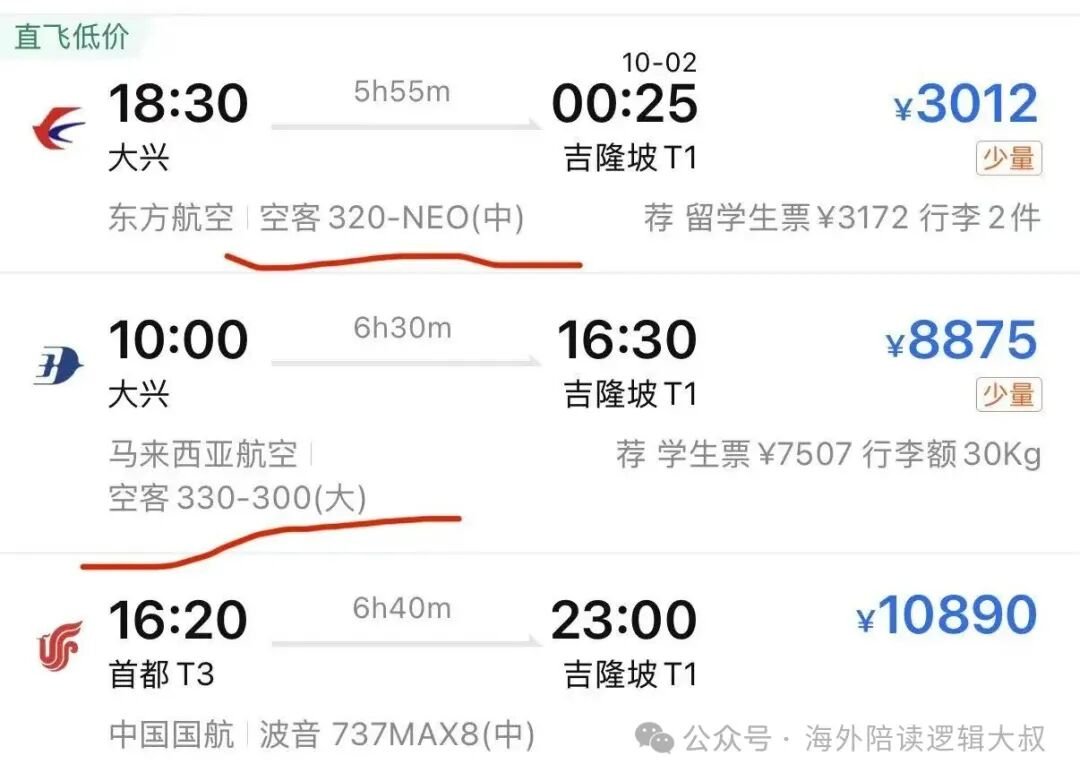
A seat you cannot tap is usually locked for weight and balance: passengers are the heaviest moving load, so systems hold seats back to tune the centre of gravity. Sit near the wing for the least turbulence, up front to get off first, and ahead of the wing for clouds. For a locked row you want, ask at the gate.
1. A front row that's "empty" usually just means locked
Start with the most counter-intuitive fact: a seat map is not an empty-seat map. Every square means "this seat is not currently occupied." Whether you are allowed to take it is governed by a separate set of rules. The usual reasons a seat is locked:
- Weight and balance. The most common — covered in the next section.
- Held for crew or special passengers. Seats reserved for connecting passengers, groups, or unaccompanied minors.
- Bassinet positions. The mounting points on bulkhead rows usually require a phone call to the airline; you can't book them online.
- Exit rows. Many airlines only release these at check-in, because eligibility has to be verified in person.
- Temporary blocks. System maintenance, an aircraft swap, or inventory held back for upgrades and paid selection.
So a seat you can't tap is rarely broken — the system is simply blocking it on purpose.
2. Weight and balance: passengers are the biggest movable ballast
Before every departure, an aircraft's centre of gravity (CG) has to sit inside an approved range. Every type has a permitted envelope, and too heavy, too far forward or too far aft are not cases of "close enough" — they are hard limits.
Fuel, cargo and baggage are fixed loads that can be placed precisely. The one heavy thing that moves around on its own is the passenger cabin. So load control spreads passengers across cabin zones to fine-tune the CG. When a front section or a whole block shows as locked, the system is often deliberately leaving space open so it can push people forward or aft until the centre of gravity lands inside the envelope once boarding ends.
If there's a row you really want and it shows as locked, the most effective move is to ask at the gate before boarding. As departure nears and weight allows, blocks are often released — especially on a half-empty aircraft.
3. Front, wing and tail: what each zone buys you
| Zone | Upside | Trade-off |
|---|---|---|
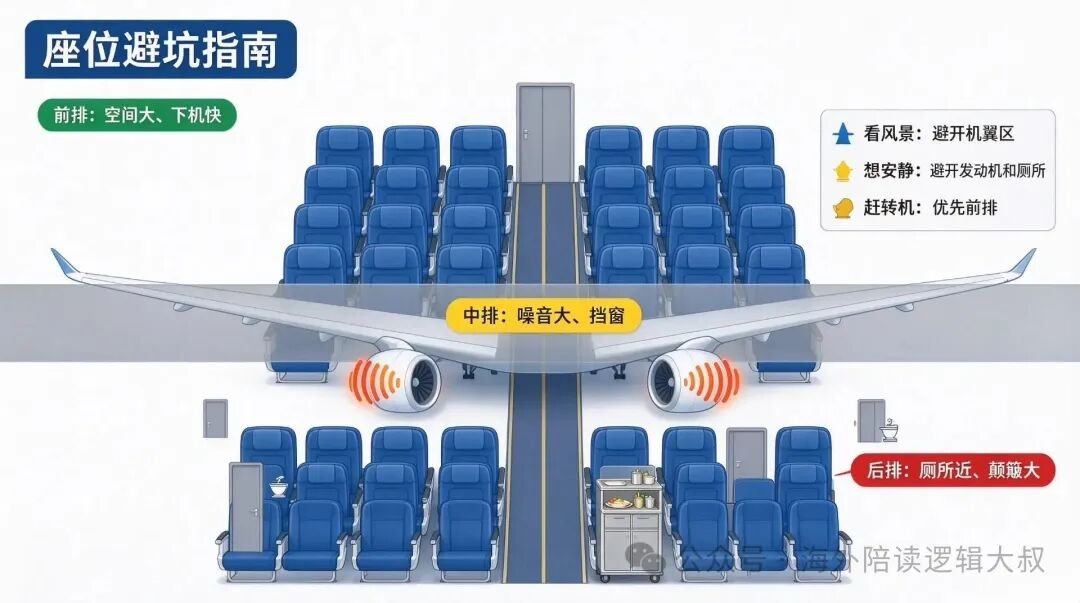
| Front rows | Off the plane first, close to the exit, away from galley and lavatories, quieter on some types | Often paid "preferred" seats; some front rows sit right at a bulkhead, so legroom is a mixed bag |
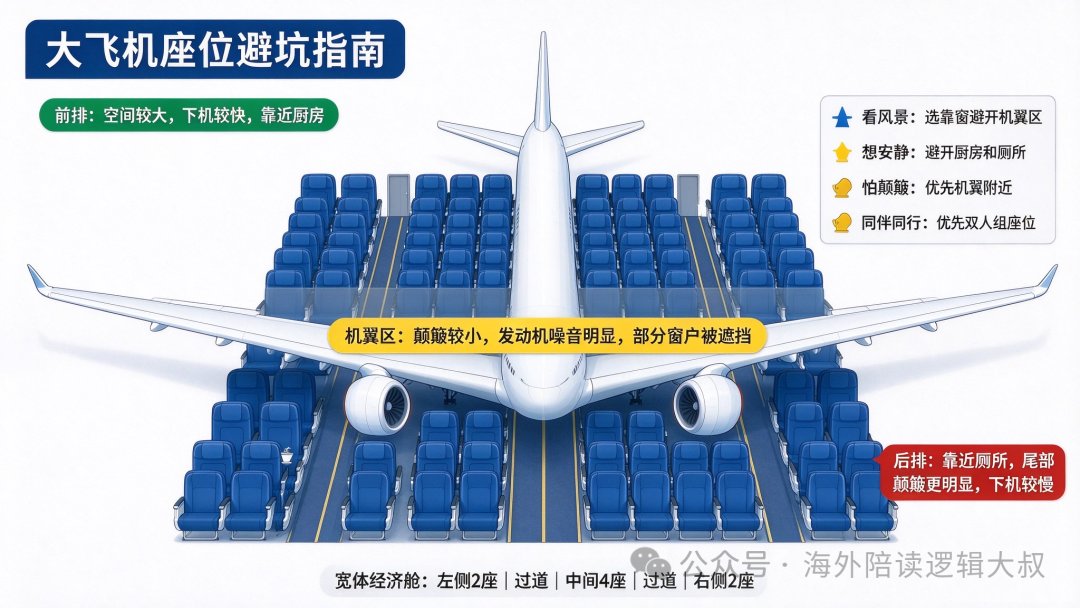
| Around the wing (mid-cabin) | The least turbulence; closest to the centre of gravity, so vertical movement is smallest | The wing blocks your window; seats behind the wing pick up more engine noise |
| Tail | Often emptier, so you can stretch across a row; close to the lavatories and galley | The roughest ride, noisiest, last off; the very last row against the wall may not recline fully |
In one line: sit mid-cabin if you hate turbulence, up front to get off first, at the back for quiet if you don't mind the motion.
4. Is sitting over the wing actually good?
The common mistake is to lump two things together. On turbulence, the wing area genuinely wins: pitch and heave in rough air are smallest near the centre of lift, while the tail, with the longest lever arm, swings the most.
On noise the conclusion flips. Modern jets hang their engines under the wing and slightly ahead, so seats behind the wing hear noticeably more engine noise; and sitting right over the wing means the wing fills your window, which rules out any cloud photography. So "over the wing" is really trading your view (and some noise) for a smooth ride — a good pick if you get motion sickness or want to sleep.
5. Exit rows: the most space, the most conditions
Exit-row seats usually offer the most legroom and get called the best seat on the plane. But they come with fixed conditions: passengers generally must be at least 15 or 16, able to understand and follow crew safety instructions, and able to help open the door and assist others out. No pregnant passengers, no infants, no reduced mobility. That's also why they're often locked until check-in.
Two overlooked downsides: exit-row seatbacks often don't recline, or recline very little; and the row directly in front of the exit often can't recline either, since it would block the exit path. On a long flight, those details matter more than the legroom.
6. Which side to sit on for clouds, sunrises and sunsets
There's an easy rule: sunrise on the east side, sunset on the west side — then convert that into left or right relative to your heading. The sun broadly rises in the east and sets in the west (slightly south of due east in the northern hemisphere, slightly north in the southern), so what matters is which way your window faces.
| What you want | Flying north | Flying south | Flying east | Flying west |
|---|---|---|---|---|
| Sunrise | Right side | Left side | Sun ahead; both sides can see it | Sun behind; not visible |
| Sunset | Left side | Right side | Sun behind; not visible | Sun ahead; both sides can see it |
Clouds are less about direction and more about view: a window ahead of the wing is best, just behind the wing is second, and directly over the wing is worst. Long-haul flights also cross time zones, so you may take off at dusk and land at dawn — worth checking the sun's position for your route before choosing a side.
7. Flying with kids: bassinets, bulkheads and the lavatory trade-off
With children, the logic changes completely. It isn't about the view; it's about whether you can cope.
- Request a bassinet early. Bassinets attach to dedicated points on bulkhead rows and usually carry weight and length limits. They cannot be booked online — you must contact the airline, and the earlier the better, since each aircraft has only a handful.
- Bulkhead rows cut both ways. No seat in front means room for the child and space for a bassinet; but armrests are usually fixed, there's no seat-back pocket or under-seat storage, and on some types the bulkhead row has no window at all.
- Weigh up being near the lavatory. It's handy for nappy changes and moving around, but comes with queues, door noise and smells. Tolerable on a short hop; avoid it on a red-eye.
- Never take an exit row. Travellers with infants or children (under 15 on most airlines) don't qualify, so don't waste energy there.
- Aim for the same row, avoid the last few. Same row or adjacent rows make it easier to help each other; the tail is rough and loud, which makes it harder for a child to sleep.
Also order child or infant meals in advance — many airlines require at least 24 hours' notice.
8. Practical checklist: when to choose, and how to grab a better seat
- Three windows to choose: at booking (widest choice, but some seats cost extra), at online check-in 24–48 hours before departure (free seats open up), and at the airport counter.
- Your seat map isn't final. On an aircraft swap, your window can become an aisle, or your seat number changes entirely; SeatGuru and aeroLOPA show reviews by aircraft and seat number ("no window here", "limited recline"), so check again before you leave.
- To sleep: pick a mid-cabin window so you can lean on the wall, and avoid the lavatories, galley and last row. Frequent bathroom trips: take an aisle. Middle seats give you neither and are the last resort.
- To grab a better seat: the gate is the last chance — on a half-full flight, ask the staff and you can often move to an empty row. On a full flight, don't fixate on position; keep the family together first.
If English at the counter isn't your strong suit and you want to explain what you need clearly, it helps to have the phrases ready — see Airport English: Check-In to Security.
There's no single right answer to seat selection, only the answer that fits this particular trip. Get the locking rules, the three zones, the direction of the sun and your children's needs clear, and leave the rest to the check-in desk and a bit of luck.
Frequently asked questions
Why can't I select a seat that clearly looks empty?
It's usually a block, not a bug — most often weight and balance, or a seat held for crew, connecting passengers or a bassinet. Blocks are often released at the gate before departure.
Where is the least bumpy seat on a plane?
Mid-cabin, around the wing. It sits closest to the centre of gravity, so the vertical movement in turbulence is smallest; the tail, furthest from it, swings the most.
Which side should I sit on for clouds, sunrise or sunset?
Sunrise on the east side, sunset on the west side — converted into left or right by your heading. Clouds don't depend on direction; pick a window ahead of the wing for the clearest view.
How should I choose seats when flying with a baby?
Request a bassinet from the airline well in advance — it can't be booked online and needs a bulkhead row, with weight and length limits. Exit rows are off-limits, and weigh up the lavatory's convenience against its noise.