
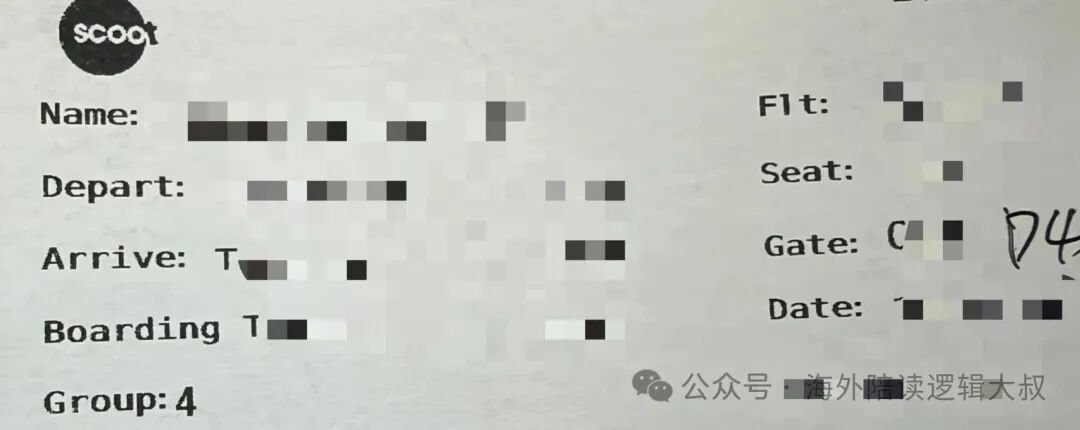
At Changi, trust the airport screens (FIDS) for your gate, not the boarding pass, which is only a snapshot. Allow 1.5–2 hours on one through-ticket, 3–4 hours on separate tickets, and 20–30 minutes more for T4. Security sits at each gate, so arrive 45 minutes early; on my first transit the printed gate held a different aircraft.
1. The gate on your ticket is only a snapshot
A boarding pass records the moment you checked in; a gate is a live operational decision that airports keep adjusting right up to departure. A late inbound aircraft, a previous flight still on the stand, a crew that cannot connect in time — any one of these can move your flight to a different gate. The paper in your hand may already be out of date before you board.
So at Singapore Changi Airport there is only one reliable source for your gate: the Flight Information Display (FIDS) screens in the terminal, plus flight lookup in the official Changi App. The gate on your boarding pass, or even in an airline app, is a reference only — airline systems update fast but may not be final, while the airport screens update more slowly but usually reflect what is actually happening.
On landing, look at the nearest screen and find your flight number; confirm it once in the Changi App; then, near the gate, glance at the screen and listen for announcements in case of a last-minute change.
One easily missed detail: in T1, T2 and T3, security screening sits at each individual gate. That means you confirm the gate first, then walk there and queue for screening. Take the wrong gate and you are not just walking extra — you are queueing again in a different line, which is where the time disappears.
2. How much connection time? It depends on your ticket
There is no single answer to "how much time should I leave". It depends on whether your two flights are on one ticket.
- One ticket, bags checked through: follow the transit route on landing — no immigration, no baggage collection. Changi advises 1.5–2 hours; within T1–T3 on a smooth day, 60 minutes can work, but with almost no margin, and a single delay makes it uncomfortable.
- Separate tickets (self-transfer): you must clear immigration, collect your bags, and check in again at the departure level. Budget 3–4 hours, because immigration queues, baggage wait and fresh security are all inside that number.
- Anything involving T4: add the shuttle bus time on top, whichever ticket you hold.
| Ticket type | Immigration? | Minimum to leave |
|---|---|---|
| One ticket, bags through-checked (within T1–T3) | No | 1.5–2 hours (60 minutes works on a smooth day, with no margin) |
| Separate tickets, self-transfer | Yes | 3–4 hours |
| Any itinerary including T4 | Depends on the ticket | Add 20–30 minutes to the figures above |
If you booked separately and need to enter Singapore, check first that your passport qualifies for entry or visa-free transit — otherwise you cannot even use the transit route. It is the same set of rules as entering for a holiday; the difference between visa on arrival and visa-free is worth a quick read.
3. Between T1, T2 and T3: free Skytrain, walk overnight
Terminals 1, 2 and 3 form one cluster, linked by a free Skytrain that runs 05:00–02:00, taking about 5–10 minutes end to end. There are separate Skytrain lines for the transit (airside) area and the public (landside) area, and they do not connect: if you clear immigration to visit Jewel on the public side, you must go through security again to return to the transit area — so do not leave the secure zone on a tight connection.
From 02:00 to 05:00 the Skytrain stops. Overnight you walk instead: inter-terminal travellators in the transit area, or link bridges on the public side. These walking routes are open 24/7, and a T1–T3 walk also takes roughly 10 minutes. With a stroller or a tight connection, count this properly — there is no replacement bus overnight, only the walk.
One detail worth knowing: only the T2–T3 leg of the Skytrain passes through Jewel's glass shell, giving you a view of the indoor waterfall — but it does not stop there.
4. T4 is not on the network: shuttle bus, and bags must be through-checked
T4 is not connected to the other three terminals. There is no Skytrain and no walking route from the transit area; the only link is a free shuttle bus. The transit-side shuttle runs all day, roughly every 8 minutes: about 12 minutes from T4 to T2 or T3, and about 19 minutes to T1. The public-side shuttle runs 06:00–24:00 every 5–9 minutes, taking about 10 minutes.
To reach T4 from inside the transit area, your itinerary must already be through-checked to your final destination (one connecting ticket). On separate tickets with bags to re-check, you must clear immigration and take the public-side bus instead.
So whenever T4 appears in your itinerary, add 20–30 minutes on top of your normal connection time, and do not estimate it using T1–T3 timings.
5. Security at the gate: the most under-counted slice
In T1, T2 and T3, security screening is at each gate, not centralised in the hall. After reaching the gate you still queue for screening before entering the boarding area, so "arriving at the gate" is not the same as "ready to board". Changi advises being at the gate at least 45 minutes before departure, and more in peak hours or when rainy-season delays pile up.
T4 is the opposite: screening happens once, in a central zone after immigration, and there is no second check at the gate. The two routines differ, so do not mix them — run a T1–T3 connection on a T4 habit and you will be stopped at the gate.
6. Rainy-season transits: the rain is short, but delays cascade
Rain in Singapore has a pattern: most of it arrives as a fierce but brief afternoon storm that clears in 30–90 minutes. What affects flights is the two monsoon seasons and the two inter-monsoon windows:
- Northeast Monsoon (November–January): the wettest stretch of the year, most pronounced in December, often as multi-hour spells of rain and occasional flooding on low-lying roads.
- Inter-monsoon (April–May and October–November): the densest afternoon thunderstorms, with plenty of lightning, but small in area and short in duration.
- Southwest Monsoon (June–September): generally drier, but early mornings often bring "Sumatra squalls" — a line of storms pushed across the Malacca Strait with stronger winds than an ordinary thunderstorm.
For a transit passenger the rain itself is not the problem; the cascade is. An inbound flight arrives thirty minutes late, then landing queues, taxiing, disembarking and the walk to the next gate all add up, and a connection that was just enough is gone. Three responses: leave more connection time than you think you need; on a single connecting ticket the airline rebooks you if you miss the link, while on separate tickets it is on you; and on landing, confirm the new gate and departure time from the screens and the app rather than the old boarding pass.
7. Your first 30 minutes after landing: a checklist
- Check the nearest screen first, find your flight number and take the current gate, not the one printed on your pass.
- Confirm in the Changi App, and look for any delay or gate-change notification.
- Work out your terminal: inside T1–T3, take the Skytrain or walk; for T4, find the transfer lounge and take the shuttle.
- Decide whether you must clear immigration: one through-ticket means straight to the transit route; separate tickets mean immigration, bags and re-check-in at the departure level.
- Check the screen once more at the gate, and give yourself 45 minutes for gate security and boarding.
In one line: in transit, the paper and the phone are the past tense; the airport screen is the present. Hold on to that single principle and a Singapore connection is genuinely easy.
Frequently asked questions
The gate on my ticket differs from the airport screen — which do I trust?
The airport Flight Information Display (FIDS) screens and the official Changi App. A gate is a live assignment; the boarding pass is only a snapshot from check-in and can change at any time.
On one ticket at Changi, what is the minimum connection time?
Changi advises 1.5–2 hours. Within T1–T3 on a smooth day, 60 minutes can work, but with almost no margin. Add more if T4 is involved or if you are travelling in the rainy season.
How do I move between T1, T2 and T3, and how long does it take?
A free Skytrain links them from 05:00 to 02:00, about 5–10 minutes per hop. From 02:00 to 05:00 it stops, so you walk via the inter-terminal travellators or public link bridges. T4 is reachable only by shuttle bus.
How much time should I leave for a self-transfer on separate tickets?
Budget 3–4 hours. You have to clear immigration, collect your bags, check in again at the departure level and go through security a second time. Check your passport's entry or visa-free transit eligibility before you fly.