
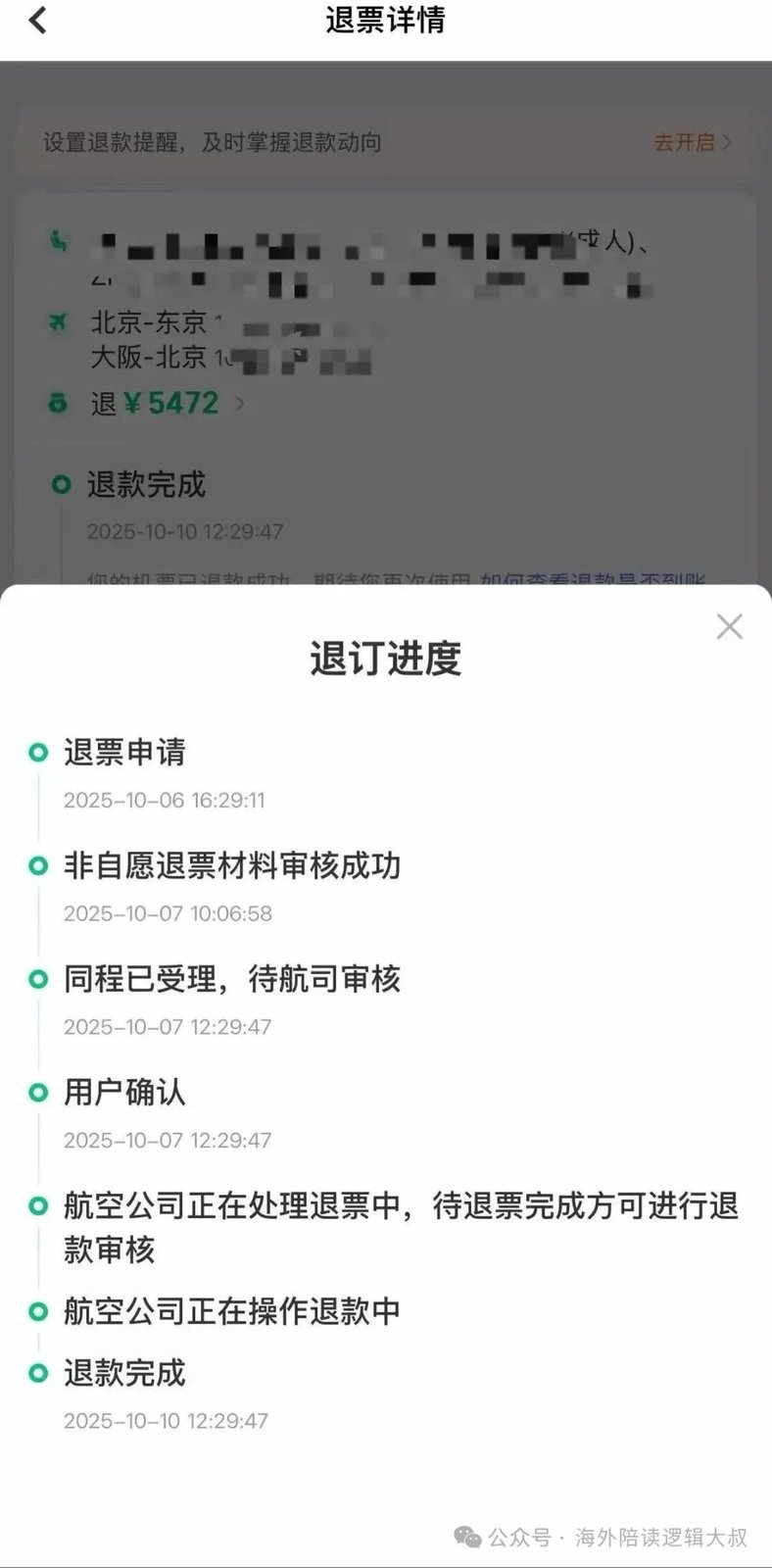
Refund and change rules come down to two things: your fare family and whether the airline caused the disruption. An involuntary change such as a cancellation means a free rebooking and a full refund; a voluntary change is charged by the fare rules. When a cancellation notice arrives, call the airline instead of self-serving a refund in the app.
1. Why the same flight has so many prices: the fare family decides everything
On the same plane, in the same economy cabin, fares can differ by two or three times. The difference is not the seat — it is the fare family. Most airlines split economy into three or four tiers with different names but the same structure:
- Light / Basic / promo: cheapest, usually non-refundable and non-changeable, or changeable only with a very high fee.
- Value / Saver / standard: changeable for a fee; refunds are deducted on a time-based scale or limited to taxes.
- Flex / Flexi / full-fare economy: free changes, though a small refund fee may still apply.
- Business: usually refundable and changeable, but promotional business fares can still be restrictive.
The key point: restrictions follow the fare family, not the cabin class. You bought "economy" — but the cheapest economy tickets may all be non-refundable. Before you pay, scroll to the fare rules and check three things: the change fee, the refund fee, and whether the words "non-refundable" appear.
Look at the change and refund fees, not the cabin name. Higher fees mean a lower tier; "non-refundable" means the lowest.
2. Voluntary vs involuntary changes: two very different sets of rights
This is the dividing line. An involuntary change is caused by the airline: the disruption is their responsibility and should cost you almost nothing. A voluntary change is when you change your mind, and fees follow the fare rules.
| Item | Involuntary (airline's fault) | Voluntary (your choice) |
|---|---|---|
| Typical trigger | Flight cancelled, big schedule change, aircraft swap, missed connection caused by the airline | Plans changed, wrong date booked, personal reasons |
| Change fee | Waived | Charged by fare rules |
| Fare difference | Free same-cabin rebooking, borne by the airline | Paid by the passenger (refunded if lower) |
| Refund | Full refund including refundable taxes | Deducted by fare rules; promo tickets may be non-refundable |
| How to claim | Keep the disruption notice | Apply yourself; the earlier the cheaper |
This is where most people lose money: the airline cancels, but the passenger taps "refund" as if it were voluntary and gets a fee deducted. When a cancellation or schedule-change notice arrives, the first move is to contact the airline and ask for an involuntary change or refund — not to self-serve a refund in the app.
3. When you can get a full refund
These are the common, broadly applicable cases; always check the airline's rules and local regulations:
- The airline cancels the flight and you choose a refund instead of rebooking — most jurisdictions require a full refund.
- The schedule change exceeds a threshold: often 1–2 hours, sometimes 4 hours or more. The bigger the change, the stronger your case.
- Involuntary downgrade: an aircraft swap moves you from business to economy; the fare difference must be refunded.
- Duplicate booking: same passenger, same flight, same date bought twice; the later ticket can be refunded with proof.
- Visa refused: some airlines offer refunds on certain fare families if you submit the refusal before departure.
- Medical reasons or a death in the family: most airlines waive fees with documentation, though the lowest promo fares may not qualify.
- The 24-hour rule for US itineraries: if you book a week or more ahead on a US-touching itinerary, you can cancel for a full refund within 24 hours (airline coverage varies).
Note that a "full refund" means the fare plus refundable taxes. Airport taxes and fuel surcharges are usually refundable, but third-party platform service fees and payment gateway charges may not be.
Malaysia: when a flight is cancelled, passengers can choose between a refund and an alternative flight (the aviation commission's consumer protection code). EU: for a cancelled flight, passengers may choose a refund regardless of how far in advance, and long delays or cancellations may also trigger fixed compensation (EC261). Quote these when you negotiate.
4. Involuntary rebooking: three moves when it is the airline's fault
I once had a direct Penang route reworked before peak season — two weekly flights merged into one, with a text message arriving the night before departure. What got me onto the next day's flight in the same time slot at no extra cost was these three moves.
- Confirm what the notice actually is: a cancellation, a schedule change, or an aircraft swap? Screenshot the SMS, email and app notification — that is your only proof for claiming an involuntary change.
- Go to the airline, not just the booking platform: rebooking authority sits with the airline, and platform agents often only relay messages. Call the airline with your order number and open with "involuntary rebooking".
- Ask for a free same-cabin change and name your acceptable window: if the only alternative offered is unacceptable, you can ask for another available flight or a full refund. Do not accept a voucher as the only option — under most rules the choice between cash and a voucher is yours.
5. Voluntary changes: how to limit the damage
- Earlier is cheaper: change fees usually scale by time before departure (30+ days, 30–7 days, 7 days–24 hours, under 24 hours). Waiting until the last day is the most expensive.
- Compare rebooking vs refund-and-rebuy: if the current fare is lower than your original ticket's change fee, refunding and buying again can win. Work out both.
- Do not rush to refund a promo ticket: the lowest tiers often refund only taxes — changing the date or walking away can be better.
- No-shows hurt most: many fare rules double the fee or void the ticket once you miss the flight, so act before departure.
6. After a refusal: the four-step appeal
A verbal no is not the end. Work through it in order, keeping a written record at each step:
- File a written complaint with the airline: use the website form or a formal email. State the order number, flight, what happened and the amount you want ("a full refund of RM 1,200"), and attach the disruption screenshot. Get a case number.
- Ask for escalation and written reasons: say "please refer this to complaints or consumer affairs, and give me the written reason and the clause you are relying on." Verbal refusals often soften here.
- Go to the regulator: MAVCOM in Malaysia, the national National Enforcement Body in the EU, or your home civil aviation authority elsewhere. File online and attach your full correspondence with the airline.
- Credit card chargeback: claim "service not provided" with your card issuer. Most banks require it within 120 days of the statement date, and the evidence chain must be complete.
If you booked through a third-party platform, platform and airline tend to pass the buck. The most effective order is: get the airline's written answer first, then approach the platform, and only then the regulator and chargeback.
7. Pre-booking checklist
- Read the fare rules before paying: find the refund and change section and confirm the change fee, refund fee and whether the ticket is refundable.
- Leave buffer for important trips: do not buy the lowest tier for a trip that matters; if you are travelling with children or a tight connection, pay a little more for a changeable fare.
- Save every notice: screenshot flight-change texts, emails and app pushes into one album.
- Book direct or with a reliable platform: when something goes wrong, a shorter channel is easier to resolve.
- Know whether it is a refund or a voucher: some platforms default to vouchers; select the cash refund yourself.
There is no mystery to refunds and changes: the rules are in the fare conditions and the rights are in the regulations. What you actually need is two minutes of reading before you book, and the clarity to tell voluntary from involuntary the moment something goes wrong.
Frequently asked questions
Why do refund fees vary so much on the same flight?
Fees are set by the fare family, not the cabin. Two economy tickets on one flight can have different rules: the cheapest promo ticket may be non-refundable, while full-fare economy is nearly free to change. Check the change and refund fees in the fare rules before paying.
The airline cancelled, but I tapped refund in the app — can I fix it?
Likely yes. Contact the airline, explain that the cancellation was their doing, and ask them to treat it as an involuntary refund and return any fee already deducted. Attach the cancellation notice; the difference can usually be recovered.
What counts as an involuntary change?
Flight cancellation, a schedule change beyond the airline's threshold, an aircraft swap that downgrades you, and a missed connection caused by the airline. The test is simple: did the airline cause the disruption? If so, it is involuntary — free rebooking or a full refund.
The airline refuses a full refund. Who do I contact?
In order: file a written complaint with the airline and ask for escalation to its complaints team; then go to the regulator (MAVCOM in Malaysia, the National Enforcement Body in the EU); finally, request a chargeback from your card issuer. Keep every email and case number.