
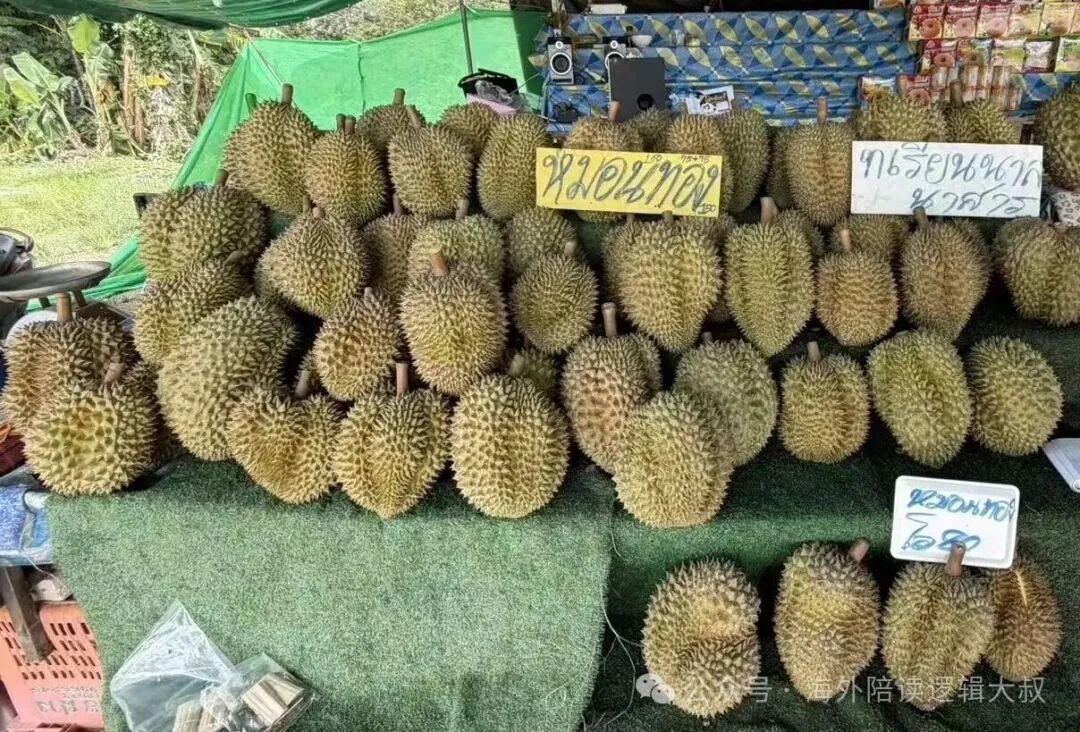
Thai durian is cut early and ripens off the tree; Malaysian durian ripens on the tree and is picked after it falls. Monthong is cut at 75–85% maturity, while Musang King takes about 90–100 days from flowering to drop and holds its peak for only 12–36 hours. Pick Monthong if you dislike bitterness, Musang King for bittersweet depth.
Durian is called the "king of fruits," but the kings of Thailand and Malaysia do not follow the same logic at all. Thailand turned durian into a scaled export commodity; Malaysia treats it as a seasonal fresh fruit. That underlying difference shapes almost everything you taste in each country.


1. Two systems: an export product vs seasonal fresh fruit
Thailand is the world's largest durian exporter, producing roughly 900,000 to 950,000 tonnes a year and accounting for the overwhelming majority of global durian trade. Malaysia grows about 400,000 tonnes, and exports a far smaller share. Volume shapes method: Thailand needs fruit that travels well, sells far and supplies steadily; Malaysia wants fruit picked at the exact moment it tastes best.
So at the table the two fruits answer different questions. Thai durian asks: how do we keep a fruit presentable after thousands of kilometres in transit? Malaysian durian asks: how do we eat it within the dozen or so hours when it smells best?
2. Varieties side by side: Monthong and Chanee vs Musang King and Black Thorn
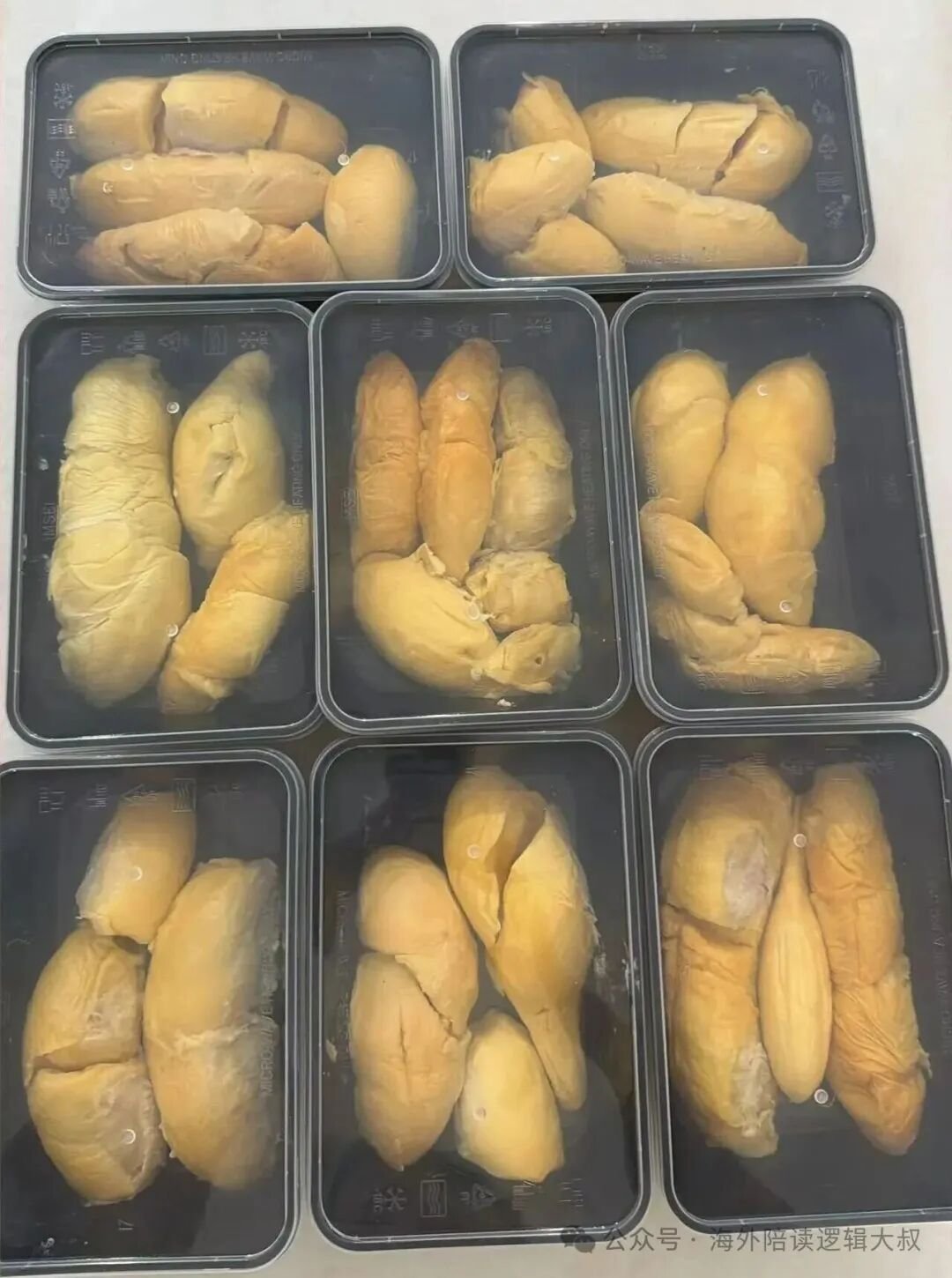
Thailand's mainstay is Monthong (Golden Pillow, D159), which alone makes up more than half of Thai durian output, followed by Chanee and Kanyao. Malaysia instead names cultivars by the Department of Agriculture's registered D-numbers: the famous Musang King (D197), then Black Thorn (D200), the older D24 (Sultan), the orange-fleshed Red Prawn (D175) and the boozy XO.
| Variety | Origin | Flesh | Flavour notes | Ref. price (RM/kg) |
|---|---|---|---|---|
| Monthong (D159) | Thailand | Pale yellow, thick, low fibre | Sweet, milky, essentially no bitterness | 12–25 |
| Chanee | Thailand | Deep yellow | Sweet with a hint of wine | 10–20 |
| Musang King (D197) | Malaysia | Golden, dense and creamy | Bittersweet, caramel, butter | 25–60 |
| Black Thorn (D200) | Malaysia | Orange-red | Heavier bittersweet, wine-like | 40–80 |
| D24 Sultan | Malaysia | Pale yellow | Balanced bittersweet, clear milky note | 15–25 |
| Kampung | Malaysia | Variable | Varies by tree, often a nice surprise | 8–15 |

3. Harvesting: Thailand cuts and ripens off-tree, Malaysia waits for the drop
This is the deepest fork between the two, and in Chinese it is often described with two terms, "tree-ripened" and "drop-ripened" — both of which actually describe the Malaysian method.
Thailand's method is cutting, then ripening off the tree. Monthong is typically cut with a knife at around 75–85% maturity, before it is fully ripe. Off the tree, it finishes ripening during transport or in a ripening room. The upside is very practical: the fruit stays firm, resistant to pressure and long-lasting, so it can be boxed and shipped thousands of kilometres by road and sea. The trade-off is that sugar and aroma are completed after the cut, and the curve is less complete than on the tree.
Malaysia's method is ripening on the tree, then picking it off the ground. Growers do not cut the fruit. They let it reach full maturity on the branch, wait until the stem forms a natural abscission layer and the fruit falls on its own, then collect it within hours. Musang King takes roughly 90 to 100 days from flowering to drop. The result is more complex flavour — but with a hard limit: the window from peak to going off is only about 12 to 36 hours. That is why Malaysian durian is hard to export fresh, and why for years it left the country only as nitrogen-frozen whole fruit or pulp.
Thai fruit is "cut down"; Malaysian fruit is "dropped." What you eat at a roadside stall in Malaysia has usually been off the tree for less than a day.

4. Flavour and bitterness: why Malaysian durian tastes bitter
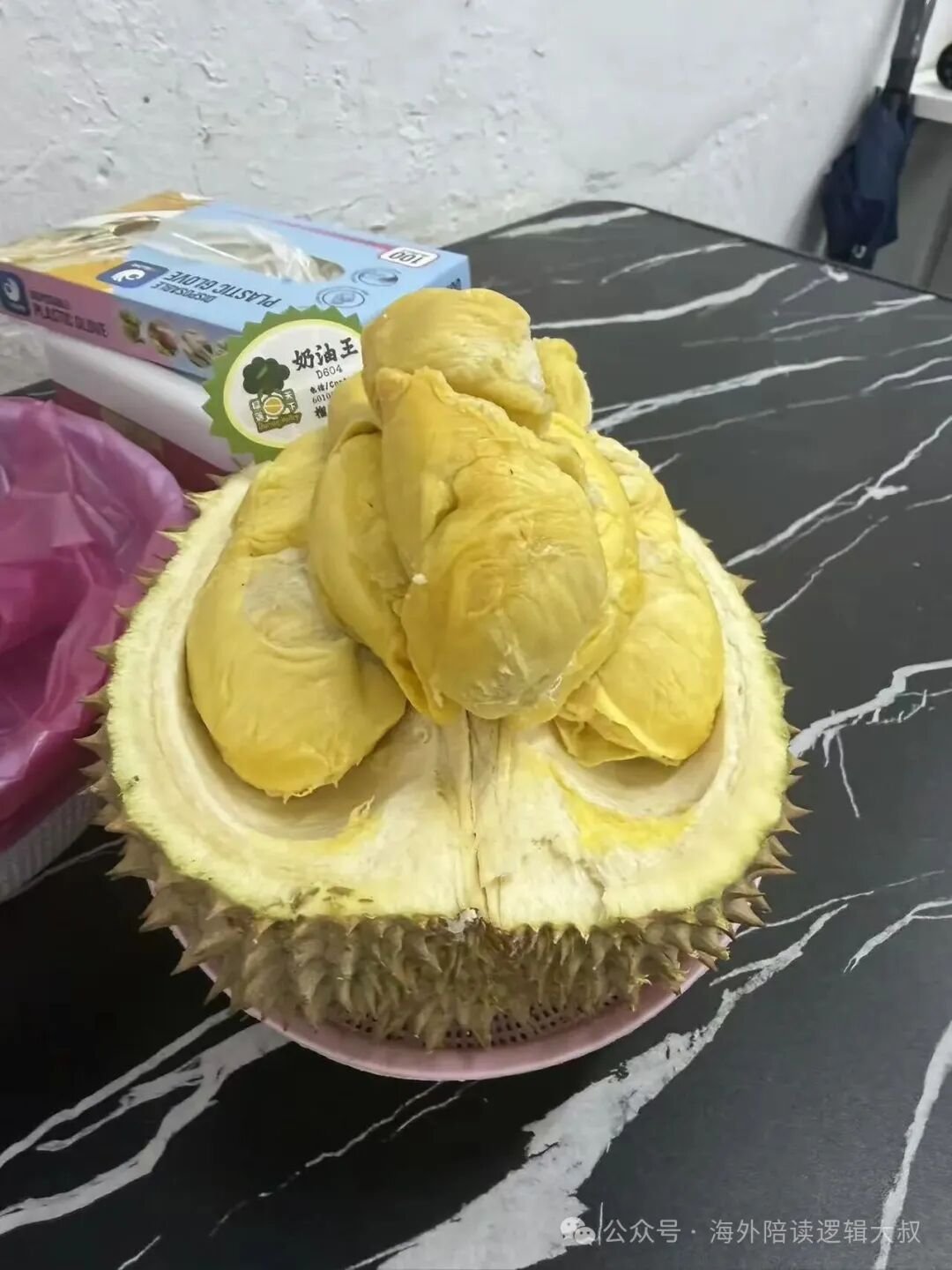
First-timers often flinch at the bitterness of Musang King. It is not spoilage — it comes from full maturity layered on top of a cultivar's nature. Thai sweetness is "clean sweet"; Malaysian sweetness is "complex sweet."
- Thai Monthong: built on sweetness and a milky note, almost no bitterness, firm flesh with a slight crunch, mild aroma — the friendliest entry point for a first durian.
- Musang King: golden flesh like butter, sweet up front then bitter, finishing with caramel and nutty notes and a strong aroma. Fruit from older trees is noticeably more bitter.
- Black Thorn: orange-red, heavier bittersweet, often a little wine-like, low yield and the highest price.
- D24, Red Prawn, XO: more balanced bittersweet; XO is named for its heavier fermented, boozy character.
The two cultures even judge "ripe" in opposite directions: Malaysians read firm flesh as underripe, while Thais read soft, mushy flesh as overripe. The same fruit earns completely different verdicts under two sets of standards.

5. Price and volume: where the gap comes from
The price gap starts with output and scarcity. Thailand grows over 900,000 tonnes a year, and scale spreads the cost. Malaysia grows less than half that, Musang King takes 8 to 10 years to bear fruit, and production clusters in Pahang, Johor and Kelantan. Here is a typical local price band in Malaysia (RM/kg):
| Variety | Ref. price (RM/kg) |
|---|---|
| Kampung durian | 8–15 |
| D24 / IOI | 15–25 |
| Monthong (imported or local) | 12–25 |
| Musang King | 25–60 |
| Black Thorn | 40–80 |
| Tupai King | 100–150 |
The same variety swings widely by year and region. In 2025 a bumper harvest pushed prices down noticeably across the peninsula, with Musang King briefly around RM25 — but that is a good-year price, not the norm. Thai Monthong stays cheap and stable year after year, which is exactly why it fills the shelves.

6. Season and origin: when and where to eat it
Thailand's durian season runs roughly April to August, with the east (Chanthaburi) arriving first and the south following. Malaysia's main season centres on May to August but staggers by state: Penang from around May, Johor mostly June to July, Perak and Pahang around June or August, with a smaller late-year season in some areas. To catch fruit in season, check the origin, not just the month.
In Malaysia, the classic setting is a roadside durian stall or an all-you-can-eat buffet: a per-head charge, opened on the spot, eat until you say stop. Penang, Ipoh and Raub are popular spots. To try a specific cultivar, just ask the vendor for D197 or D200 and look at the stem and the number tag.

7. Buying advice: how to choose without losing money
- Decide the flavour first, then the variety. If you dislike bitterness or it is your first time, take Monthong or D24. For intense bittersweet, go straight to Musang King. Do not start with Black Thorn — it is not an entry-level fruit.
- Bigger is pricier, not necessarily better. Monthong often exceeds 4 kg; Musang King tends to small and medium sizes, and a "five-chamber" fruit (all five segments full) is the most valuable.
- Open it on the spot. For a whole fruit, always have it opened in front of you, check the chamber count and flesh colour, and swap it immediately if you find empty chambers, a watery taste or sourness.
- Check the number. Malaysian cultivars carry an official D-number: D197 for Musang King, D200 for Black Thorn. A fruit labelled "Musang King" with no number is far easier to pass off.
- Freshness first; do not rush a whole fruit into the fridge. Drop-ripened fruit is best eaten the day you buy it. If you must keep it, do not chill the whole fruit — cold halts the post-drop ripening.
- Nitrogen freezing is a compromise that works. Much of the "fresh" Musang King sold outside Malaysia is nitrogen-frozen whole fruit; it keeps most of the flavour, but it is not the same as fruit that fell that morning.

8. A few small things about eating durian
Pairing durian with mangosteen is the most widespread combination in Southeast Asia: one is called the "king of fruits," the other the "queen." Folk belief holds that mangosteen is cooling and tames durian's "heat." There is no need to take that literally, but the tart mangosteen does cut the richness, and locally people also reach for coconut water or simply more water.
A few practical notes: one or two segments at a time is plenty, since durian is high in both fibre and sugar; do not eat it with alcohol, which tends to bring bloating and discomfort; and the smell clings to hands and cars, so stalls usually keep a basin of water for washing up, while ride-hailing cars often ban it outright. To hunt for stalls on foot, follow the George Town walking route — the old town's vendors mostly hide at the mouth of side lanes.
Frequently asked questions
What is the biggest difference between Thai and Malaysian durian?
Harvesting. Thai Monthong is cut at around 75–85% maturity and ripens off the tree, which suits long-distance shipping. Malaysian durian is left to reach full maturity and fall naturally, giving more complex flavour but a very short freshness window.
Why is Malaysian durian bitter?
Bitterness comes from full ripeness combined with cultivar character, especially old-tree Musang King and the fermented XO. Bittersweet is the point, not spoilage — if you dislike bitterness, start with D24.
Which is more expensive, Musang King or Black Thorn?
Black Thorn usually is. It has a lower yield and larger fruit, typically RM40–80/kg locally in Malaysia, while Musang King runs about RM25–60/kg and can fall lower in a good season.
When is durian season in Malaysia?
The main season centres on May to August but staggers by state: Penang from around May, Johor mostly June to July, Perak and Pahang around June or August, with a smaller late-year season in some areas.